
The Debate Industrial Complex and the Wrestling Match For God
By Delman Rasheed


All views expressed in this article are the author’s own and do not reflect the viewpoint of Oases of Wisdom as a whole.
Muslim-Christian apologetics has existed since the earliest encounters between the two traditions. From the first centuries of Islamic expansion, theological disagreement emerged around questions of authority and the nature of divine truth itself. Early polemical exchanges, preserved in seventh-to-eighth-century writers such as John of Damascus, show how quickly these debates took shape within the intellectual worlds of the Levant. What began there is a long history of interreligious arguments structured around competing claims to scripture and interpretation.

Modern apologetics, however, is a different environment entirely. The form in which these arguments now circulate through media is a very recent development, still in its early stages relative to the traditions it draws from. Regardless, the shift is seismic, transforming how arguments are produced, consumed, and understood.
Even within the last few decades, the public faces of apologetics looked entirely different. Figures such as the late Ahmed Deedat and Jimmy Swaggart conducted debates within a media landscape shaped by broadcast television. That format has largely disappeared from public religious discourse.
Contemporary apologetics now operates within an internet attention economy that rewards speed and circulation. Arguments appear in fragmented form across clips, thumbnails, short videos, and reaction content. Each exchange becomes divisible into moments, and each moment becomes portable content. The speed of the exchange you are having becomes part of the argument itself.
The result is an acceleration of ideological discourse at an unprecedented scale that no earlier media systems could produce. Arguments are processed rapidly, each competing for visibility within an overly saturated ecosystem.
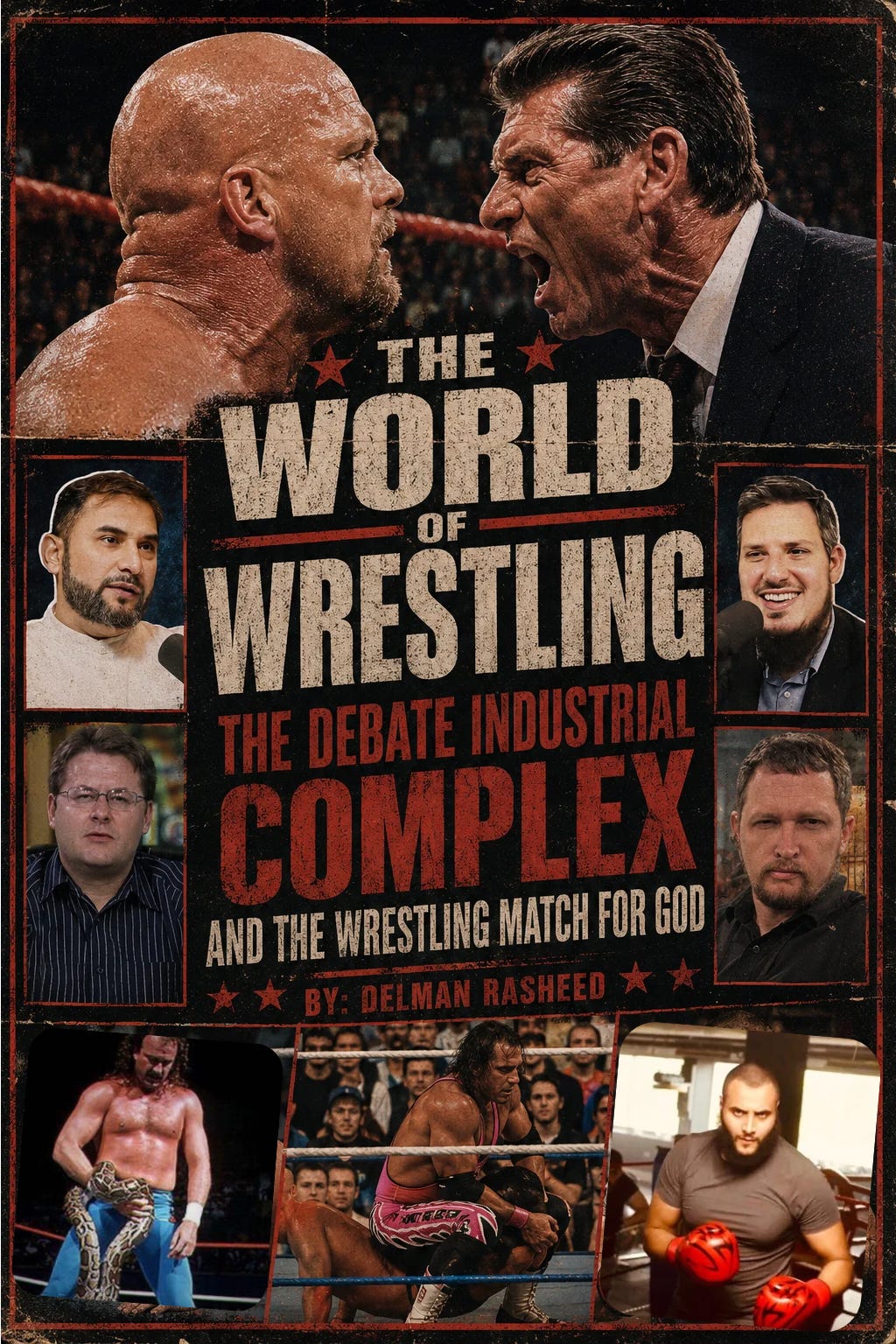
Modern YouTube apologetics increasingly resembles professional wrestling in the sense Roland Barthes describes in The World of Wrestling, where the point is to stage meaning so it can be seen immediately. Debate becomes a spectacle where truth appears to unfold in real time.
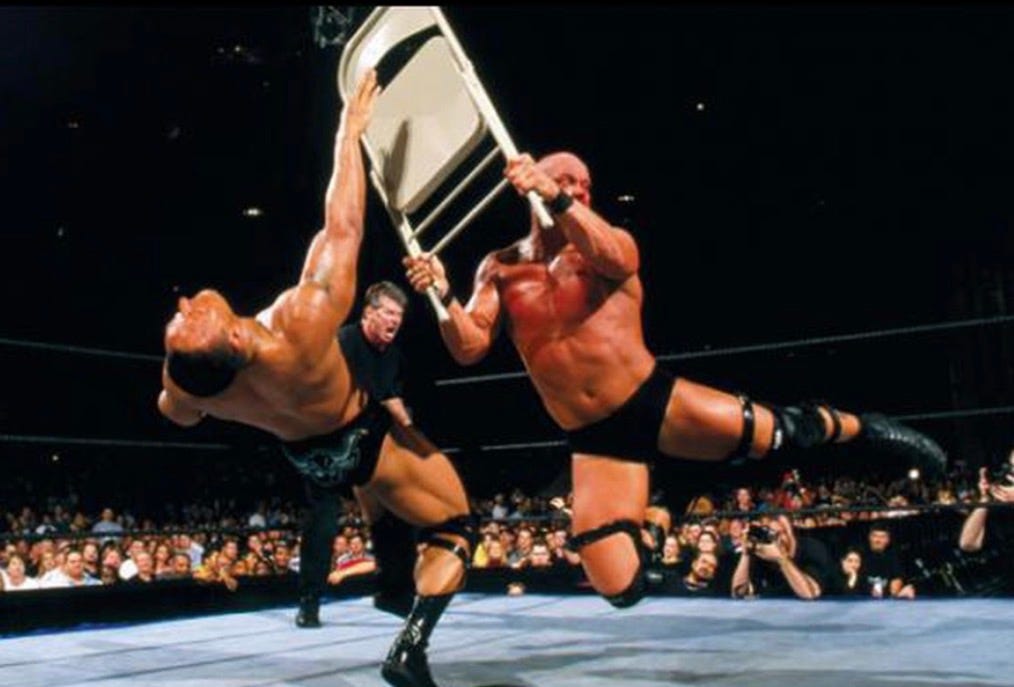
Barthes describes wrestling as a world of absolute intelligibility, where everything must be instantly understood. There is ambiguity, slow unfolding, and a need to interpret everything in traditional formats, but here everything is immediate. You cheer for the good guy and boo the bad guy. Similarly, the structure of modern apologetics rewards performances where argument becomes a dominance display.
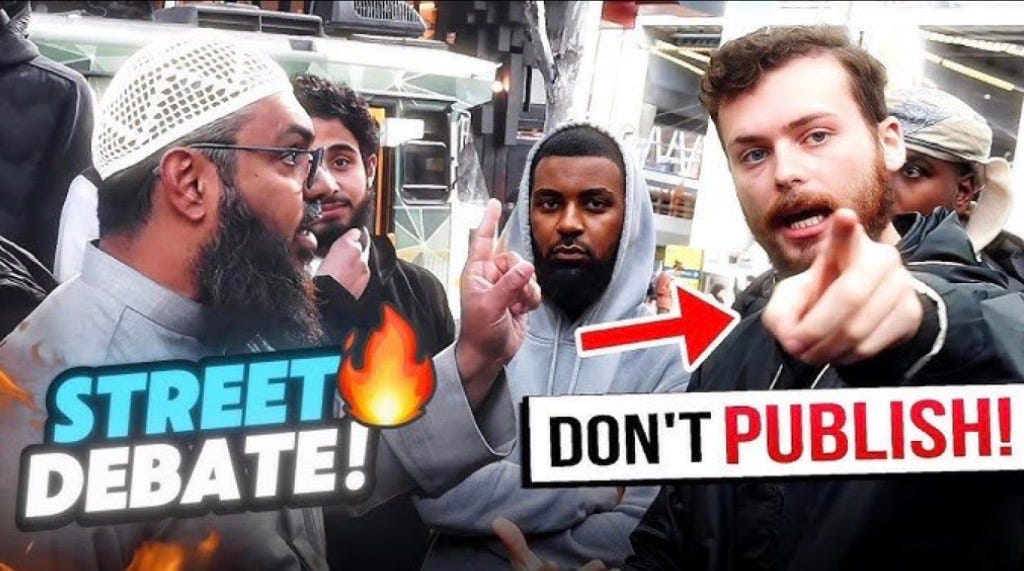
Each exchange is presented as a self-contained moment of apparent victory or defeat. The audience ignores the chain of reasoning to read a sequence of intentionally placed signs instead. This logic appears long before a video is even clicked; debaters are framed in advance through captions and titles as a rational authority versus a confused opponent, turning the exchange into a system of pre-assigned meaning rather than an open evaluation of ideas.
Wrestling exposes its performance through heavy exaggeration. Humiliation is key, conflict is dramatized, and every reaction is made legible. In modern apologetics content, rhetorical exchanges often take on that same exaggerated clarity and enjoyment of humiliation.
Barthes also describes wrestling as a spectacle of suffering and justice, where the audience looks for the visible restoration of order instead of a fair contest. The satisfaction comes from seeing imbalance corrected in a way that feels satisfying and complete. Just as the wrestling fan understands that the outcome is structurally predetermined, the catharsis of the outcome is where its true value lies.
Accordingly, the modern debate is consumed through the lens of who got exposed, who collapsed, and who restored the upper hand. The audience is largely indifferent to tracking formal premises; the real reason they are watching is for the exact moment where they perceive justice will land.
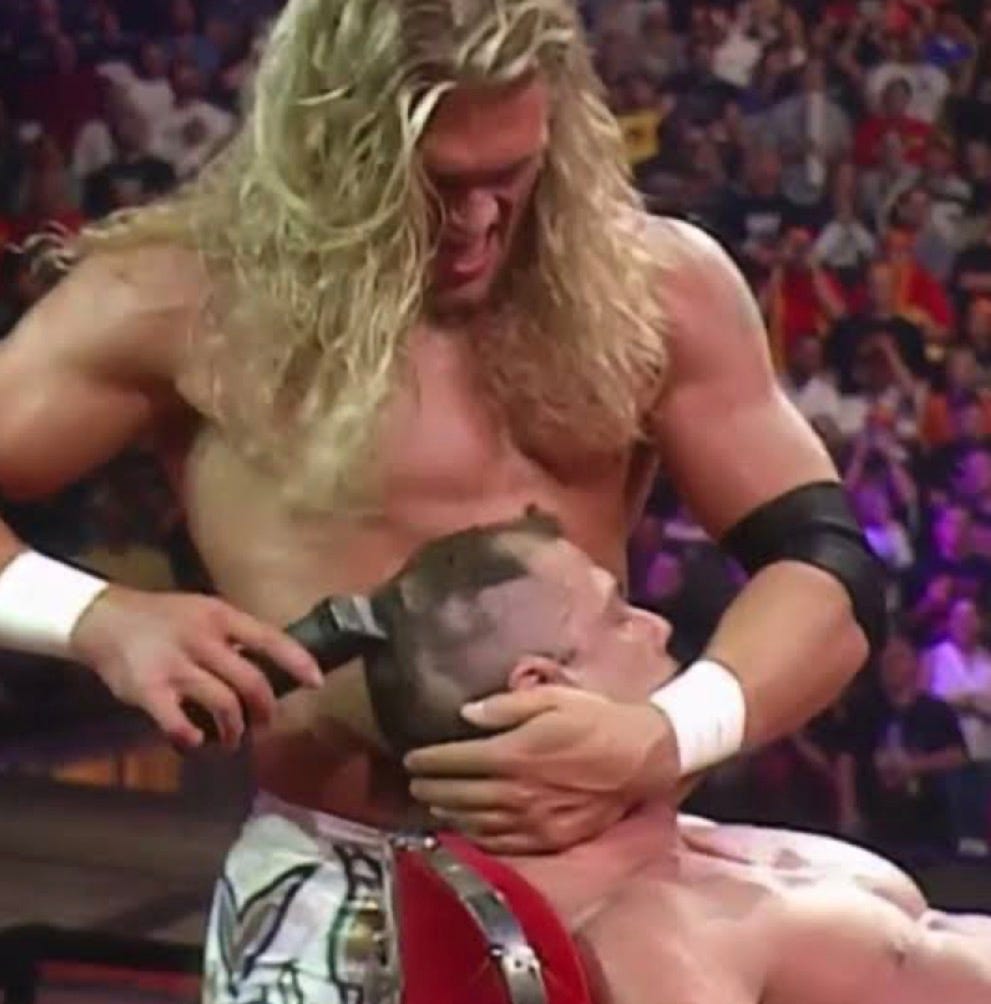
Dense theological and philosophical questions are thus translated into bite-sized exchanges that can be consumed by anyone and shared easily. Barthes treats the wrestler’s body as the ultimate representation, where meaning is fully expressed through physical performance. In debate culture, the body manifests through the delivery of arguments, where how something is said begins to carry more weight than what is actually said.
This environment allows the exact same debate to exist in two entirely different forms. There is the original conversation, and there is the edited fragment that is spread afterward. A two-hour discussion becomes an endless goldmine of thirty-second clips injected with a completely new context and a new meaning. Often, the exact same clip is used by both interlocutors and presented as a victory for their respective audiences. The result is that viewers walk away with the perception that their side emerged victorious, regardless of the actual substance of the discussion.

At a deeper level, wrestling is a form of modern myth, reducing complex realities into clear symbolic conflicts. Debate content mirrors this explicitly. Many participants and viewers view themselves as Crusaders or jihadists of old, fighting online battles that represent much larger moral struggles. Geopolitical anxieties surrounding immigration policy and demographics hold a strong grip on modern discourse, amplifying the notion that these debates are a direct reflection of an existential threat posed by the Other.

The enemy is your enemy; watching your opponent lose through the strength of your own ideology reinforces your worldview and confirms the strength of the moral framework you already hold. Defeating an opponent creates the feeling that you hold ultimate moral authority over someone you view as completely misguided or, worse, deceitful.
This kind of spectacle abolishes consequences. Each moment exists on its own without needing to connect to a larger, coherent structure. It establishes a distinction between real passion and the image of passion; what matters is its visible expression. Defeat is simply something extended and displayed. In debate culture, moments of defeat are replayed and circulated ad infinitum, turning a single unguided exchange into a lasting marker of loss.
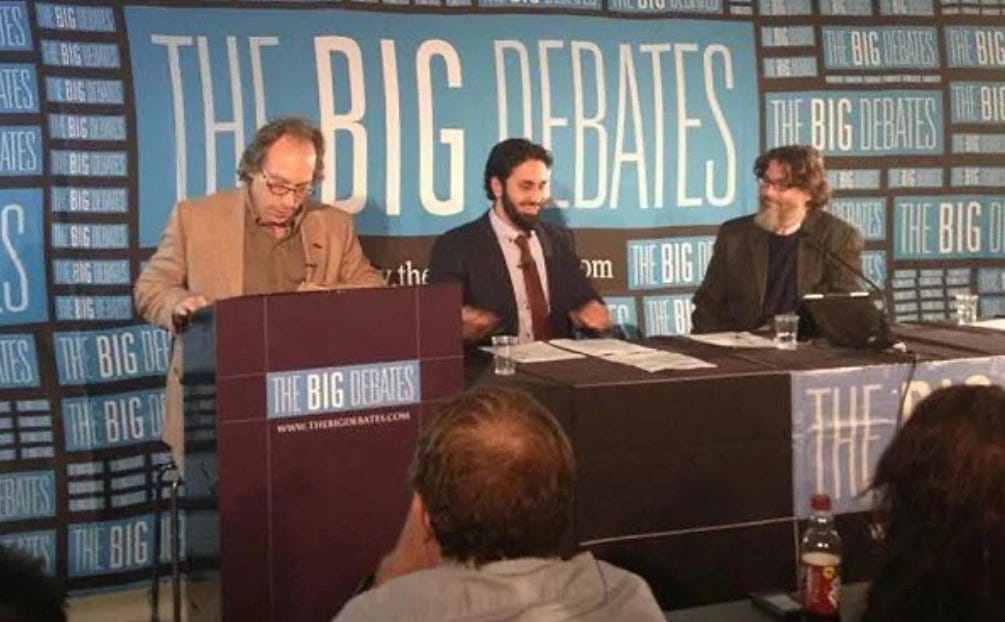
At the same time, the performance has to feel natural. Clarity must appear authentic. Apologetics follows a similar rule where the most effective, viral moments are those that look spontaneous, such as a street dawah or campus evangelism encounter, even when they are filled with hyper-structured talking points.
How did we get here? The trajectory stems from early online New Atheism debate culture. Over time, the space became an industry. Attention and views became measurable and monetizable, and content organized itself around what retains viewers best. This is why the word dilemma shows up in so many video titles. The algorithm connects similar phrasing and pushes viewers into a chain of near-identical content built around the same adversarial framing.
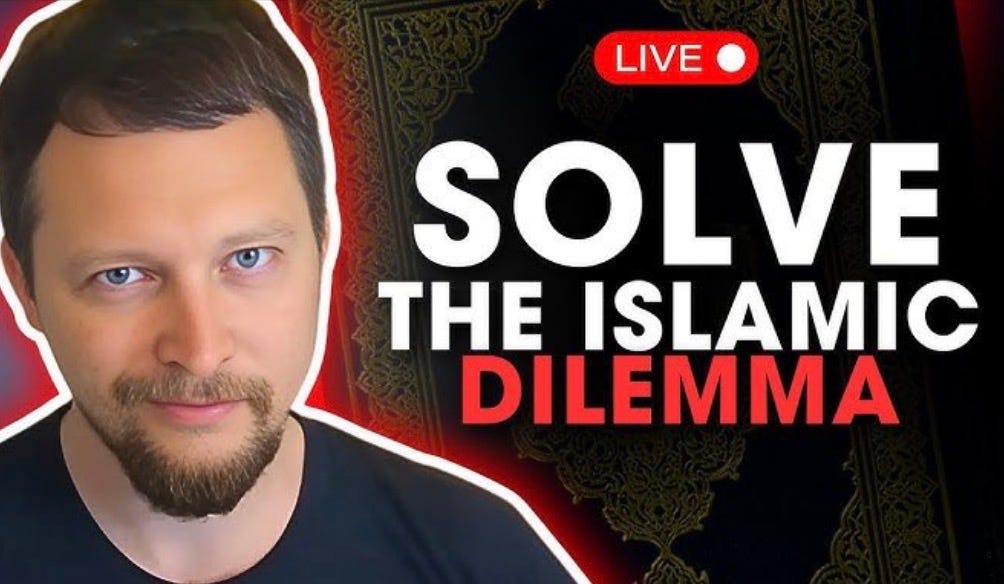
That brings up a harder question around complicity. Debaters and audiences alike keep the game running through participation, even as the intellectual depth begins to thin out. At some point, we have to examine the extent to which participants in these debates platform destructive behavior and misinformation in pursuit of unquestionable victory. The echo chambers created through unwavering, loyal fanbases produce environments where accountability becomes nearly impossible.
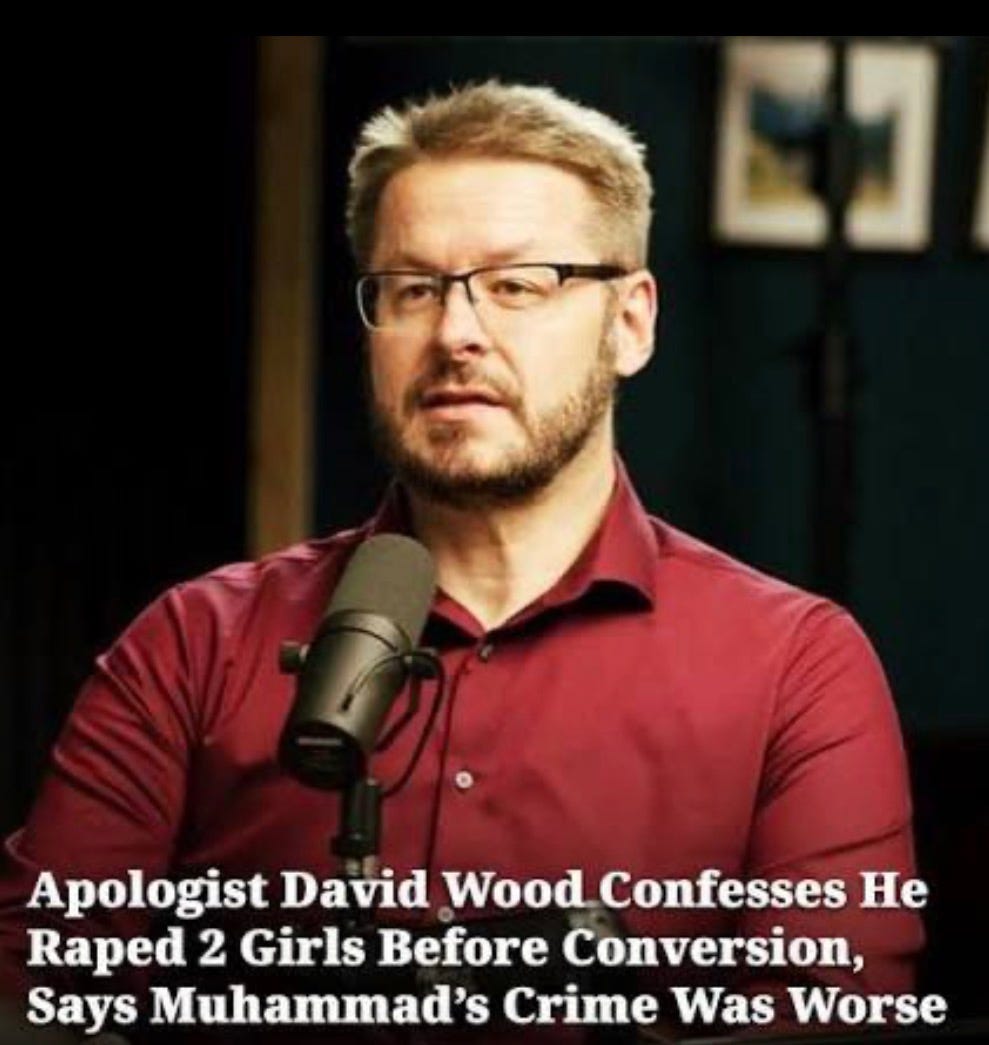
Statements made and misinformation spread often escape any meaningful scrutiny because criticism is interpreted as an attack on the community itself. The Al-Zutt polemic is a prime example of this dynamic: a blatantly false translation of a historical text that even many Christian apologists acknowledge is a tactic used primarily to provoke and rile up their opposition’s audience.
Debate culture is increasingly reduced to ad hominem attacks, ego clashes, and controversy loops. Inquiry is secondary to the performance required to stay visible and relevant.

A provocative claim generates anger, anger generates responses, and responses generate further visibility. The audience becomes part of the mechanism itself. Every correction, rebuttal, quote-post, and response video boosts viewership and strengthens the algorithmic reach of the original content.
The incentives of the platform reward conflict because conflict creates interaction. A creator does not only gain from supporters watching. Opponents often become some of the most valuable participants because their frustration produces large scale engagement. This creates a strange dynamic where responding can simultaneously challenge a message and amplify it. The desire to defend one’s faith or community becomes the very mechanism that is preyed upon to further the reach of the content being challenged.
This creates a stronger incentive to produce a reaction through exaggeration or deception. Rage, outrage, and humiliation become forms of currency. The algorithm ignores whether a person makes a compelling argument, but it does measure whether people stop, watch, comment, and share.
The ultimate irony is that much of this content presents itself as a defense of objective truth against propaganda and manipulation, while the medium itself forces participants to adopt the mechanics of the spectacle.
This situation is simply what happens when discourse gets filtered through attention systems at scale. Apologetics itself remains separate from inherent harm; serious argument, careful reasoning, and long-form engagement still exist within the margins and matter on their own terms. What needs examining is the state of the ecosystem around it. Once attention becomes the organizing principle, certain patterns become inevitable, regardless of intention.
What you end up with is a kind of exhaustion inside the discourse. A loop forms where reaction feeds counter-reaction. The structure holds itself together through constant engagement. It is currently in the weird process of self cannibalism.

I am not suggesting that polemics or religious debate can be removed from intellectual life, nor that they should be. The development of theological ideas throughout history has often emerged through disagreement and engagement with competing traditions. Early Christian, Jewish, and Islamic intellectual traditions were shaped through centuries of critique and response. Disagreement itself has often been a catalyst for clarification and deeper reflection. The reality is that religious debate will continue because communities develop through conversation with those who challenge their assumptions. The question is not whether polemics exist, but what the future will look like with the internet as the new mechanism of social communication and exchange.
One should not see apologetics itself as inherently harmful. Serious argument, careful reasoning, and long-form engagement still exist within it and matter on their own terms. What I’m pointing out is a specific problem that is emerging. Once attention becomes the organizing principle, certain patterns become more likely, regardless of intention. It is best that we prepare for this and reflect on the impact it has on our approach to religion and how we interpret our faith. Is the future of religion meant to be experienced through a primarily defensive lens? What impact does that have on our development? What will a generation nurtured in this environment look like? How can we, as a community, help navigate the downstream effects of this new reality?
 | A guest post by
|
These kinds of influencers what makes me uncomfortable to watch them.
I my humble opinion, what passes for dawah these days is not really dawah but theatrics. Does anyone ever convert to the other side as a result of these public debates? For me, they are not interesting or even educational.